LearnLens
An education analytics platform in development, using computer vision to help teachers follow classroom engagement, review patterns and plan more personal support.
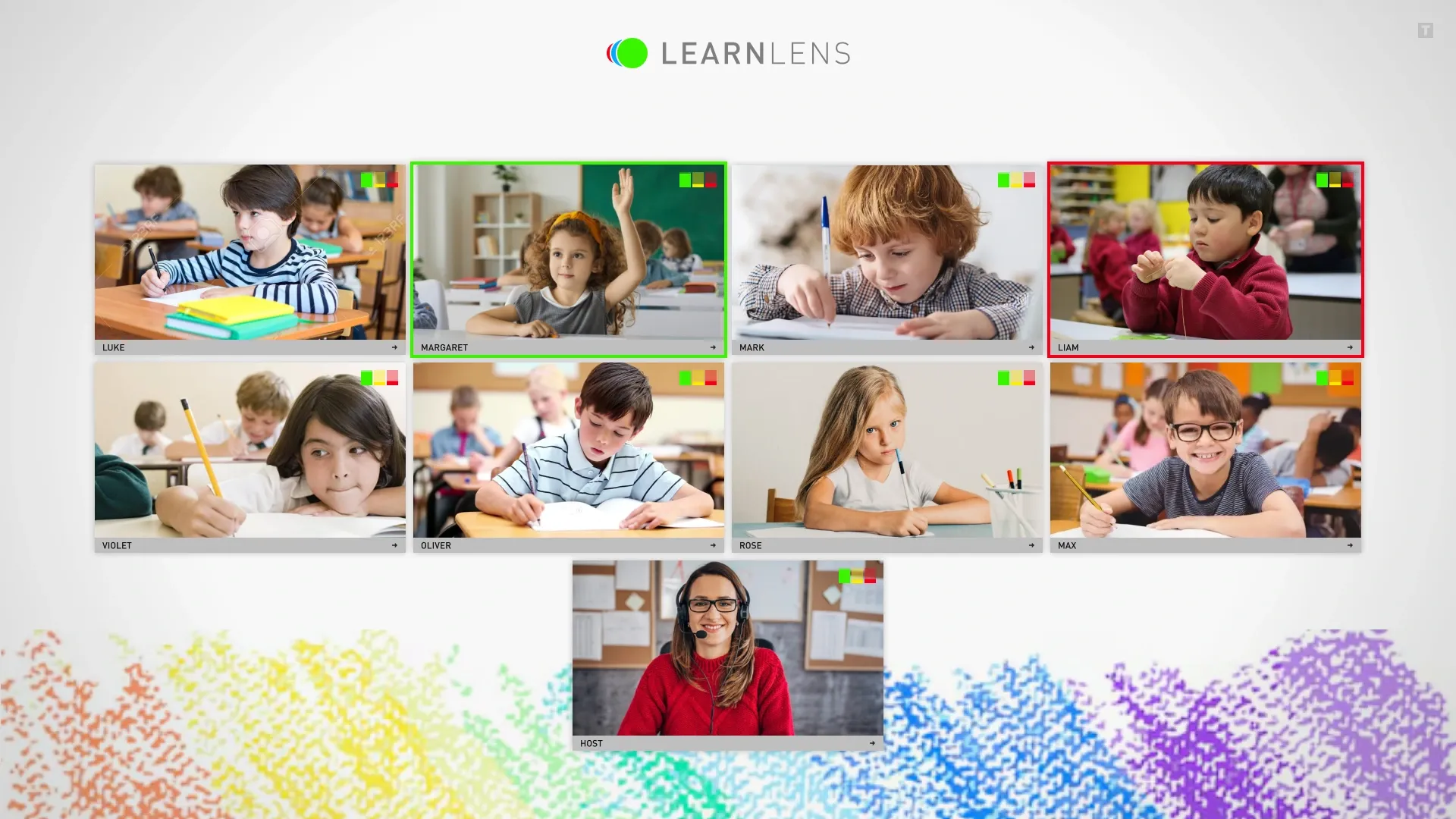
Live insight into learning,built for educators.
Teachers make decisions throughout a lesson: when to slow down, explain something differently or give a student extra help. LearnLens is being built to bring another source of information into those decisions, using visual signals to explore patterns in classroom attention and participation.
We’re developing the platform from the computer vision models to the teacher dashboard. It brings live indicators, individual histories and session reports together, helping educators review what happened in the room and consider what to do next.
Follow the classroom in real time
LearnLens uses lightweight models to process visual cues such as facial expressions, posture, gaze direction and movement. The dashboard organizes these into estimated engagement indicators. These signals are designed to support a teacher’s observations: they cannot, by themselves, establish a student’s attention, feelings or understanding.
Notice changes across lessons
The platform is being built to maintain individual and class-level histories, making changes between sessions easier to review. Notifications can draw attention to shifts in recorded patterns, giving teachers a reason to check in, revisit an activity or consider additional support.
Make the information useful
A teacher needs a clear view, with detail available when it matters. We’re designing an interface that moves from classroom summaries to historical snapshots and individual sessions. Planned features include AI-suggested teaching responses and exportable reports for academic planning and conversations with families, with educators deciding how to interpret and use them.
Build the systems behind the dashboard
OpenCV and TensorFlow support visual processing and modeling, while a Python and Node.js backend manages sessions and data synchronization. The architecture includes local processing and encryption, with privacy requirements informing how classroom information is collected, accessed and retained.